
Eval Crusher feature
Know the Range Before You Trade the Day
November 4, 2026 · 3 min read · Hobe Sound Trading
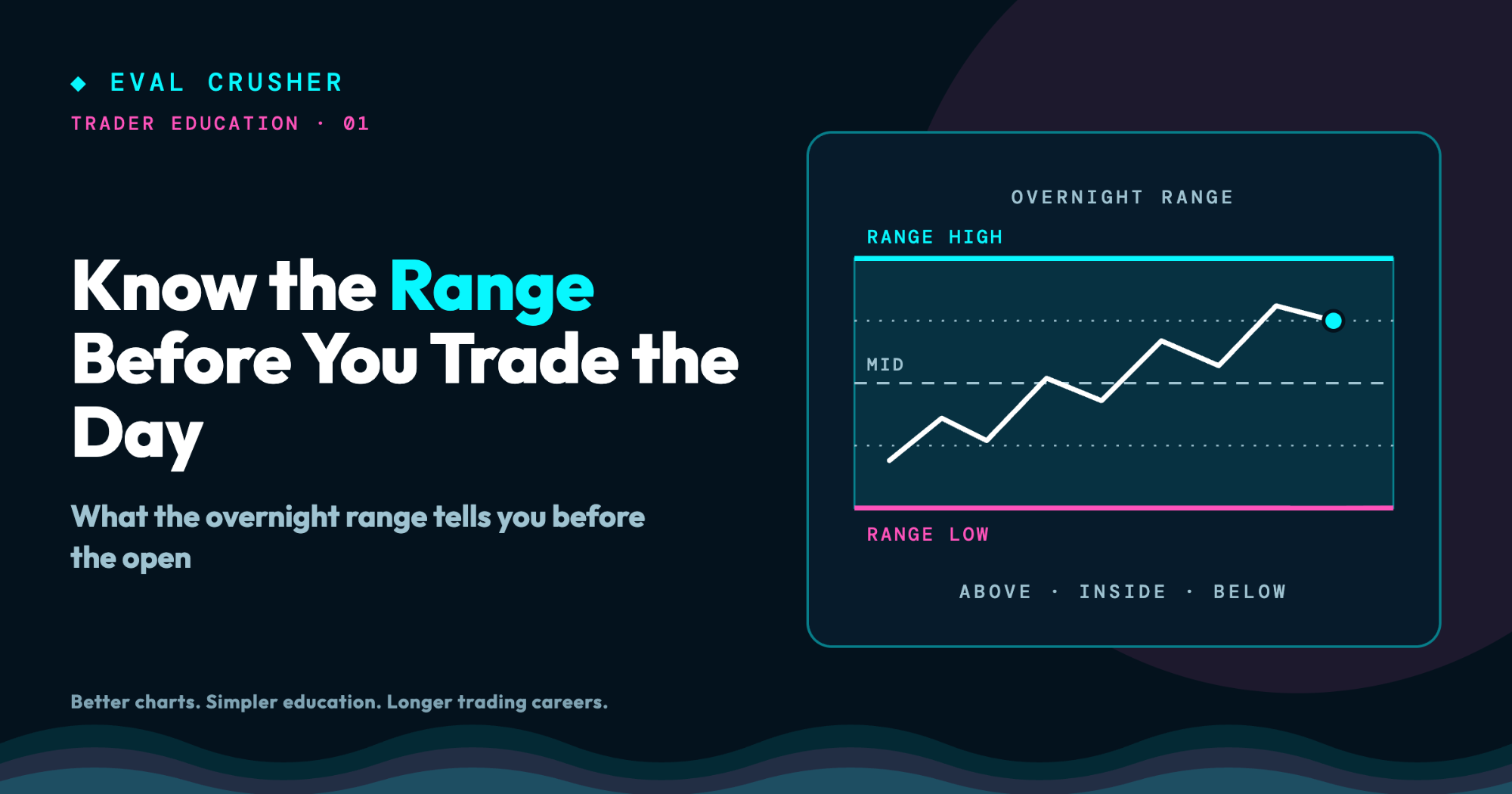
Most new futures traders open their chart at 8:30, see candles moving, and jump in. The problem is they’re reading the last five minutes and ignoring the story that was written overnight. The daily range gives you that story at a glance.
What is the daily range?
Futures trade almost around the clock. While most people sleep, the market keeps building a high and a low. That stretch from the evening session to the morning is the overnight range. By the time the day session opens, you already have a map: a ceiling (the range high), a floor (the range low), and a middle.
The indicator draws it for you as a shaded box, with lines at the high, the low, the midpoint, and the 25% and 75% marks.
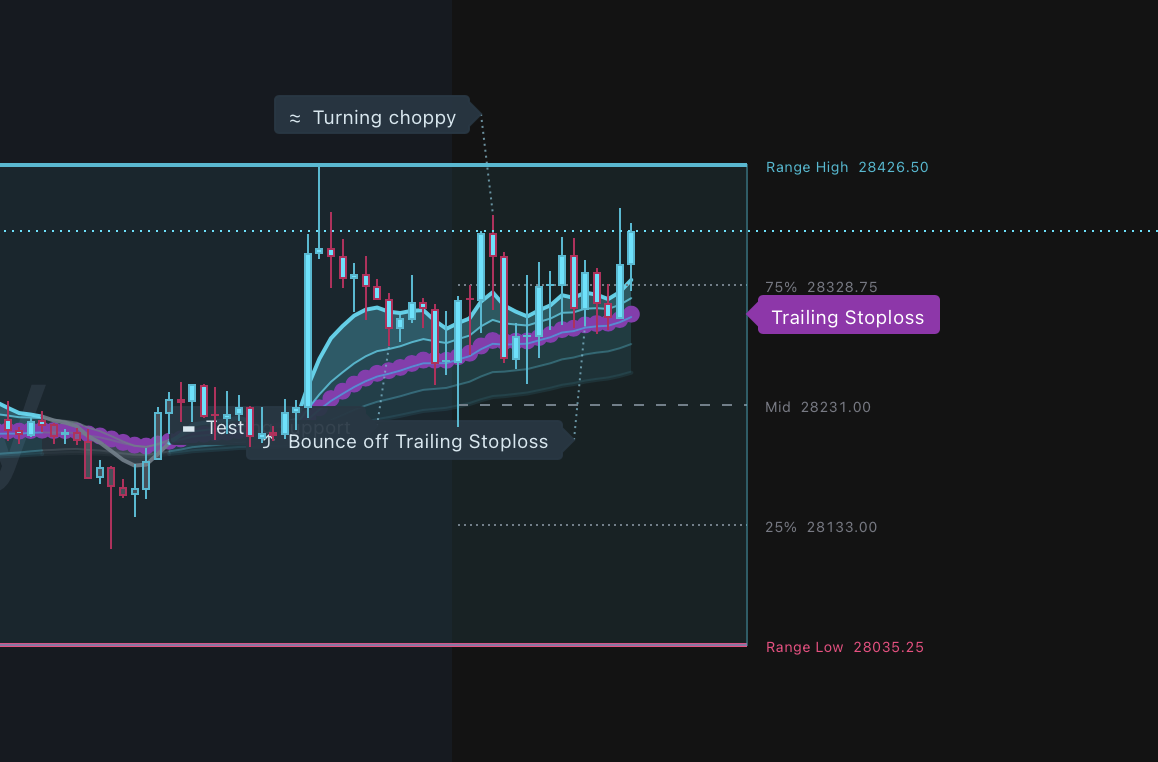
What the range tells you before the day starts
Ask three quick questions before the open:
- How big is it? A tight range usually means a quiet night. A wide range means the market already did a lot of moving. Either way, you know what kind of day you’re walking into.
- Where did price open? Above the range, inside it, or below it. Above means buyers pushed past last night’s ceiling. Below means sellers pushed through the floor. Inside means the market is still undecided.
- Which edge is closer? Distance from the high and low tells you where the next important decision is likely to happen.
Why location matters
The same candle means very different things depending on where it prints. Out in the middle of the range, price has no real reason to react, so there’s no edge in location. Near the high or low is where the day’s story tends to get decided. Price either respects the level and turns, or pushes through it and the day starts to take a direction.
Traders often watch for three things at the edges:
- A break and hold: price moves outside the range and stays there.
- A break and retest: price moves outside, comes back to touch the level, and holds on the same side.
- A failed break: price pokes outside, then closes back inside.
You don’t need to predict which one happens. You just need to know the level is there so you aren’t surprised.
A simple pre-market routine
Before you place a trade, take 30 seconds:
- Where are the range high and low?
- Is price above, inside, or below?
- How close is the nearest edge?
Write the answers down, then trade your plan instead of the noise.
The takeaway
The range doesn’t predict what price will do, and nothing can. What it does is give you context, so you know where the important decisions are likely to happen and you stop guessing.
Educational content only, not financial advice. Futures trading involves substantial risk of loss and isn’t suitable for everyone.
See it on your own chart.
Eval Crusher puts the range, the market read and plain-English coach notes right on your TradingView chart.
EXPLORE EVAL CRUSHER